



In this blog:
- The Shift from Lagging Metrics to Preventive and Predictive Risk Signals
- Safety Data Finally Converged with Claims and Operations
- Supervisor-Led, Real-Time Safety Intervention
- From Detection to Decisioning
Rhythm’s Top 5 Advancements in Driver & Fleet Safety
For years, driver and fleet safety has been managed in hindsight after crashes, after violations, after claims were already filed. In 2025, that changed. This year marked a clear inflection point: fleet safety evolved from reactive compliance into real-time, intelligence-driven operational control with Rhythm Innovations. The results are not just fewer incidents. The Rhythm platform drives stronger insurance outcomes, protected uptime, and measurable EBITDA impact.
Here are the top five advancements that defined Driver and Fleet Safety this year:
1. The Shift from Lagging Metrics to Preventive and Predictive Risk Signals
Traditional safety programs relied on rear-view indicators like accidents, citations, and TRIR. In 2025, leading fleets began prioritizing predictive risk signals instead.

These signals enabled intervention before high-severity incidents occurred.
Why it matters: Preventing serious injury and fatality (SIF) events protects people and shields organizations from catastrophic losses that derail operations and exits.
2. Safety Data Finally Converged with Claims and Operations
Fleet safety data no longer lives in isolation. This year saw accelerated convergence across:
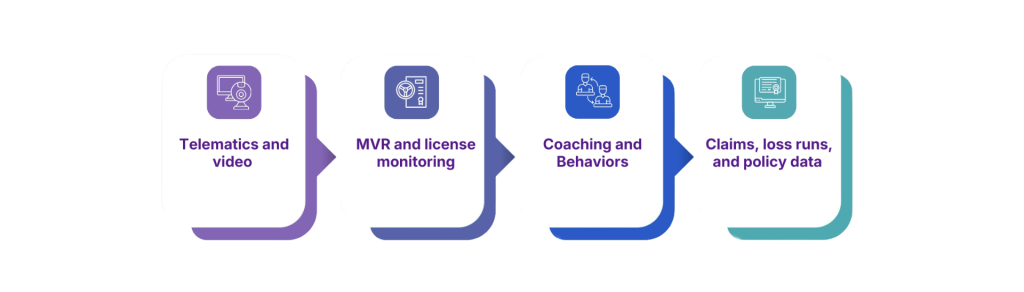
Rhythm Innovations unifies these signals into a single operational risk view connecting driver behavior directly to claims volatility, premiums, deductibles, and insurability. Rhythm Innovations give the frontline leaders the information they need to act proactively.
Why it matters: Safety decisions now reflect financial and insurance reality, not just policy adherence.
3. Supervisor-Led, Real-Time Safety Intervention
The biggest safety gains didn’t come from more alerts; they came from empowering frontline leaders. Modern fleets equipped supervisors with:
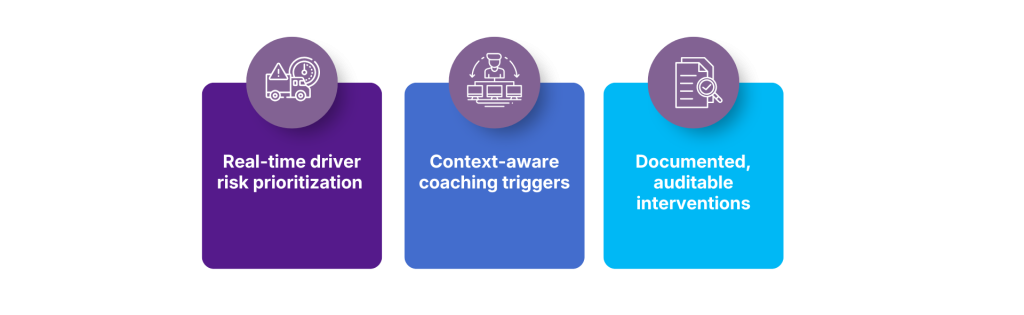
Safety became something leaders did daily, not something reviewed once a month.
Why it matters: When supervisors act early and consistently, unsafe patterns are corrected before they become claims.
4. Continuous Driver Eligibility Replaced Periodic Checks
Annual or quarterly compliance checks are no longer sufficient. In 2025, fleets adopted continuous driver readiness enforcement, validating:
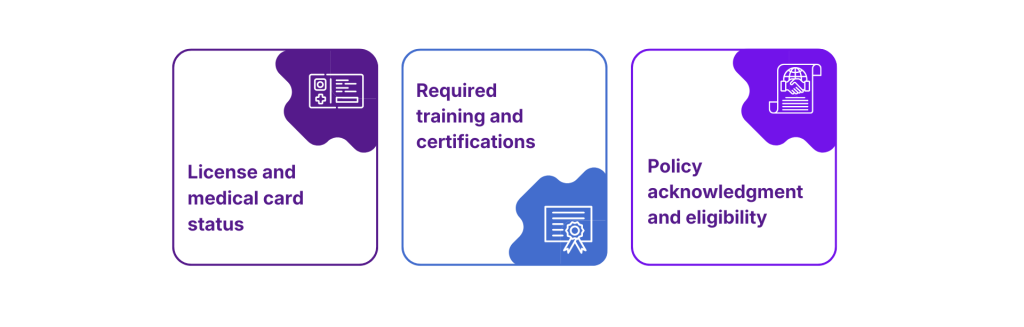
Non-compliant drivers are now flagged or restricted before dispatch, route assignment or vehicle access.
Why it matters: Preventable claims caused by unqualified drivers dropped, along with regulatory and legal exposure.
5. From Detection to Decisioning
2025 is the year we moved into risk-based decision support. Instead of overwhelming teams with data, Rhythm helped them act decisively.
Why it matters: Fleets scaled safety programs without scaling headcount while improving consistency across locations.
The Bigger Picture for 2026 and Beyond
2025 will be remembered as the year fleet safety crossed a critical threshold. Safety is no longer just about reducing accidents. It’s about protecting uptime, stabilizing insurance programs, and safeguarding enterprise value in real time.
Fleets that embrace predictive, intelligence-driven safety don’t just become safer.
They became more resilient, more insurable, and more valuable.
By Michael Miller, Chief Strategy Officer, Rhythm Innovations