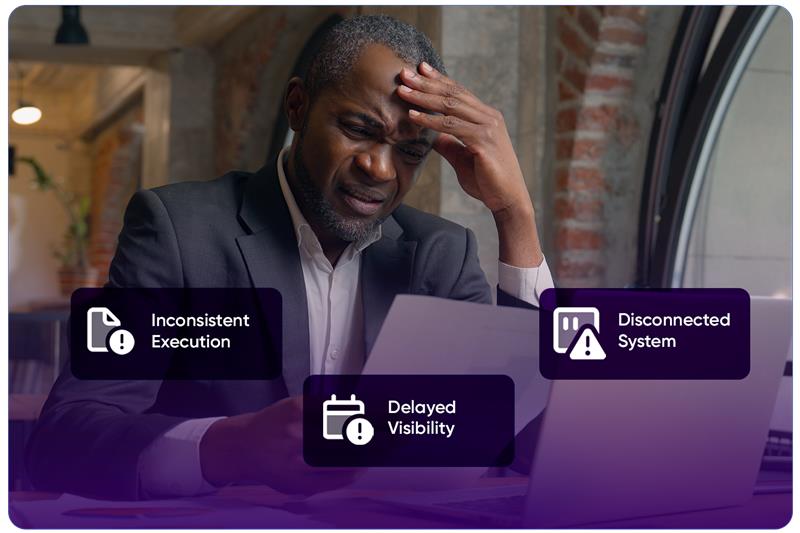
Connect brokers, TPAs, and internal systems in one real-time view.

Leverage analytics to uncover patterns and prevent rising losses.

Automate workflows and decisions to accelerate resolution and reduce TCOR.
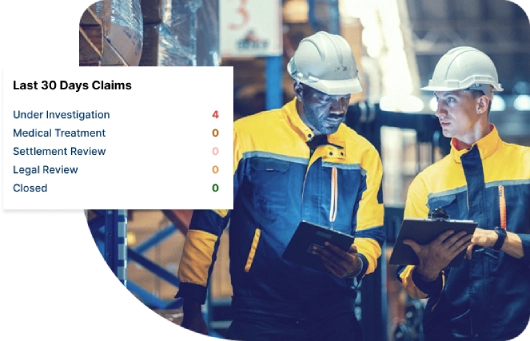
Unify claims data, workflows, and analytics in one intelligent platform accelerating resolution, reducing costs, and uncovering the risks that drive future losses.
Identify high-impact cost drivers across injuries, locations, and roles enabling targeted interventions that reduce severity, accelerate recovery, and lower total claim costs.
Connect safety, claims, and risk data in one ecosystem linking incidents to outcomes and turning every claim into insight that strengthens prevention across the enterprise.
Trigger real-time alerts on aging cases, rising reserves, and compliance risks keeping teams responsive, preventing delays, and maintaining control over claim outcomes.
Consolidate application data and risk insights into a single, compelling view showcasing performance improvements and safety investments to secure better coverage and outcomes.

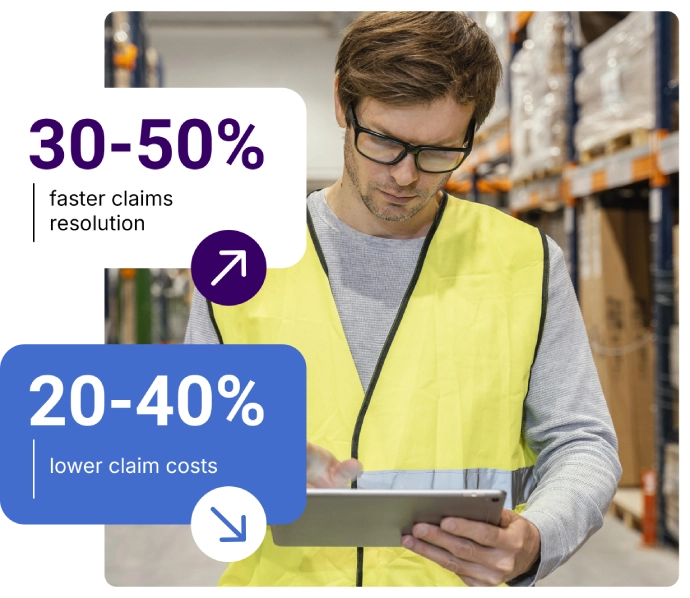
Proactive claims management and automation accelerate resolution, improving efficiency and outcomes.

Predictive analytics and connected insights reduce claim severity, control expenses, and limit financial exposure.

Centralized, real-time intelligence gives leaders complete transparency and actionable oversight across every claim in the enterprise.

Claims Management is the process of tracking, managing, and resolving insurance claims.
Effective claims management helps reduce cost, improve outcomes, and identify trends.
Claim frequency measures how often claims occur during a defined period.
Claim severity measures the financial impact of a claim.
Organizations reduce claims through prevention, training, risk management, and corrective action.
Claims defense is the ability to demonstrate responsible actions before, during, and after an incident.
Subrogation is the recovery of claim costs from a responsible third party.
Claims data helps identify recurring risks and prioritize prevention efforts.
Traditional claims management software often focuses on managing claims after a loss occurs. Rhythm connects claims data with safety performance, workforce readiness, compliance, inspections, corrective actions, fleet operations, and operational risk intelligence.
Incident management focuses on reporting, investigating, and resolving safety events, while claims management focuses on the financial, legal, insurance, and recovery aspects of a loss event.