
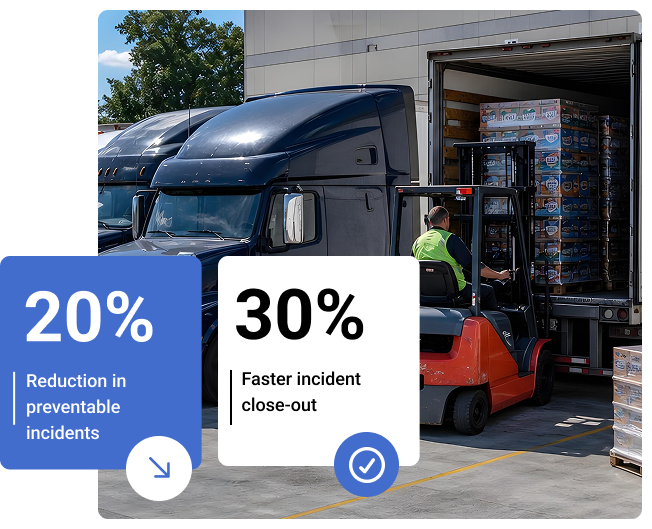
Fast-moving equipment, conveyors, mixers, slicers, forklifts, sanitation chemicals, and temperature-controlled environments create constant risk.
Rhythm provides real-time hazard reporting, digital safety steps, and predictive monitoring to identify unsafe conditions early and prevent SIF-level injuries.

Food & Beverage operations must comply with OSHA, FDA, FSMA, GFSI, HACCP, SQF, and internal quality programs all requiring documentation and consistent execution.
Rhythm automates documentation, training verification, inspections, and corrective actions, giving teams instant audit readiness with less administrative burden.

Seasonal staffing, high turnover, and varying experience levels make it difficult to ensure consistent safety practices and quality procedures.
Rhythm standardizes frontline training, readiness checks, digital SOPs, and micro-learning delivered directly to workers on mobile so every shift performs safely and correctly.

Safety events, equipment inspections, sanitation logs, temperature controls, and facility hazards often live in separate systems.
Rhythm unifies these signals into a single command center giving operations, quality, and EHS leaders a complete, real-time view of risk, readiness, and workflow performance.
Reduce injuries, strengthen compliance, and maintain consistent quality across production and distribution with one unified intelligence platform.
Your leaders will have a unified view composed of the command centers most relevant to your operations bringing every dimension of safety, risk, and performance into one intelligent ecosystem

Predict and mitigate collisions, claims, and driver risk with real-time, fleet intelligence.

Prevent serious injuries and fatalities (SIFs) by identifying risks early, embedding controls, and monitoring exposure patterns in real time.

Streamline event and claims management, reduce total cost of risk, and improve financial outcomes.

Connecting every worker, workflow, and risk signal into one unified platform that empowers leaders and teams to prevent incidents and lower total cost of risk.